

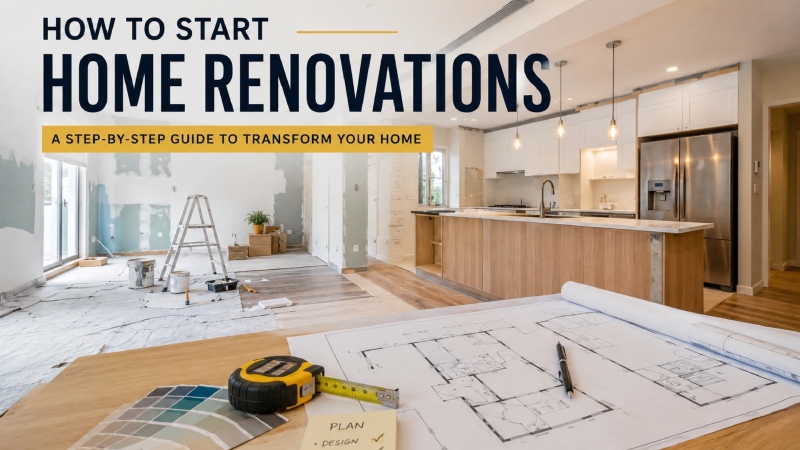
How to start home renovations can feel overwhelming, but with the right planning, the process becomes easier, cheaper, and more successful.Whether you want to upgrade your kitchen, refresh your living room, or completely remodel your house, the right planning makes everything easier, cheaper, and more successful. This guide will walk you through simple, practical steps to start your home renovation journey the right way.
How to Start Home Renovations: Understand Your Renovation Goals
Before picking up any tools or hiring contractors, clearly define what you want.
Ask yourself:
- Do I want a full home makeover or small improvements?
- Which areas need the most attention?
- Am I renovating for comfort, resale value, or both ?
Having clear goals helps you avoid unnecessary spending and confusion later.
How to Start Home Renovations:Set a Realistic Budget
A budget is the backbone of any renovation project.
Break your budget into:
- Materials cost
- Labor cost
- Furniture and decor
- Emergency buffer (10–20%)
A smart budget prevents financial stress and keeps your project under control.
Plan Your Design and Style
Now decide how you want your home to look.
Choose:
- Modern, classic, minimal, or luxury style
- Color schemes
- Flooring and wall finishes
- Lighting ideas
You can browse Pinterest or home design websites for inspiration.
Prioritize Renovation Areas
You don’t have to renovate everything at once.
Start with:
- Kitchen (most valuable upgrade)
- Bathroom
- Living room
- Exterior improvements
Focus on high-impact areas first for better results.
Hire the Right Professionals
If your renovation is big, you may need experts like:
- Contractors
- Interior designers
- Electricians
- Plumbers
Always check:
- Reviews
- Previous work
- Pricing
- Experience
Good professionals save time, money, and mistakes.
Get Necessary Permissions (If Needed)
Some renovations require legal approval, especially structural changes.
Make sure you:
- Check local building rules
- Get permits if required
- Follow safety regulations
This step avoids future legal issues.
Create a Step-by-Step Timeline
A timeline keeps your project organized.
Example:
- Week 1–2: Planning and design
- Week 3–5: Demolition and structural work
- Week 6–10: Finishing and interior work
Clear scheduling reduces delays and confusion.
Start Small and Monitor Progress
Don’t rush everything at once.
- Start with one area
- Monitor quality regularly
- Fix issues immediately
- Stay in touch with contractors
This ensures better results and fewer mistakes.
Add Final Touches
Once major work is done, focus on details:
- Paint finishing
- Furniture placement
- Lighting setup
- Decorations
Small details bring your renovation to life.
Conclusion
Starting a home renovation doesn’t have to be stressful. With proper planning, budgeting, and the right team, you can transform your house into a beautiful and comfortable space. Take it step by step, stay organized, and your dream home will slowly become reality. Click here.







Leave a Reply